Railroads, Roads, and Engineering Feats

QUICK FACTS
San Juan Mountains feature historic railroads, wagon roads, and modern highway engineering
Transportation development occurred primarily in the late 19th and early 20th centuries
Infrastructure supported mining, trade, and settlement in remote alpine terrain
Denver & Rio Grande narrow-gauge railroads were central to regional connectivity
Routes evolved into today’s scenic highways and mountain passes
Engineering solutions included tunnels, trestles, switchbacks, and Cliffside grading
The region reflects a continuous evolution from wagon routes to modern byways
The San Juan Mountains are not only visually dramatic—they also represent a major chapter in American mountain engineering. Narrow-gauge railroads clung to canyon walls, wagon roads carved switchbacks into steep slopes, and modern highways now trace many of the same historic corridors. Together, they reflect ingenuity, persistence, and adaptation to some of the most challenging terrain in North America.
Exploring these systems reveals how transportation shaped settlement, mining, and regional development, while also highlighting the physical constraints of high-alpine geography.

Denver & Rio Grande Narrow-Gauge Railroads
The Denver & Rio Grande Railway played a defining role in opening the San Juan Mountains during the late 19th century, linking remote mining communities to regional markets.
Key Features
Steep mountain grades designed for narrow-gauge operation
Wooden trestles spanning deep canyons and river valleys
Tunnels blasted directly through solid granite
Cliffside alignments following natural contours of the terrain
These rail lines transported ore, supplies, and passengers through previously isolated regions, fundamentally transforming the mountain economy and settlement patterns.
(Related page: Denver & Rio Grande Narrow Gauge – Historic rail system connecting mining towns across the San Juans)
Durango & Silverton Railroad
The Durango & Silverton Narrow Gauge Railroad preserves a working example of historic mountain rail travel.
Notable Features
Steam locomotives navigating tight canyon curves
Cliffside track sections above the Animas River
River crossings and narrow shelf alignments
Access to remote landscapes unreachable by road
This route functions as both a living museum and a continuing demonstration of early rail engineering in extreme terrain.
(Related page: Durango & Silverton Railroad – Historic steam rail journey through the San Juan Mountains)
Historic Wagon Roads and Toll Routes
Before railroads, wagon roads and toll routes formed the first transportation network across the San Juans.
These early routes were carved directly into steep terrain, often following river valleys and mountain passes. Built with limited tools and immense labor, they enabled mining, trade, and early settlement.
Otto Mears developed many toll roads and bridges across the region
Routes frequently included switchbacks and basic retaining structures
Many alignments later influenced modern highway corridors
(Related page: Historic Wagon Roads and Toll Routes – Early transportation corridors in the San Juan Mountains)
High Mountain Pass Engineering
Routes such as Engineer Pass and Cinnamon Pass required early engineers to solve complex alpine challenges without modern machinery.
Key Challenges
Unstable soils and scree slopes
Heavy snowfall and short construction seasons
Remote access to materials and labor
Extreme elevation and weather variability
Switchback designs and careful grading allowed these routes to become functional corridors for mining and travel.
(Related page: High Mountain Pass Engineering (Engineer, Cinnamon) – Engineering challenges of alpine pass construction)
Trestles, Bridges, and Tunnel Construction
Railroads and later highways relied on engineered crossings to navigate deep canyons and unstable slopes.
Timber trestles provided flexible canyon crossings
Stone and steel bridges spanned rivers and gorges
Rock tunnels maintained continuous mountain routes
Retaining walls stabilized steep slopes and roadbeds
Many of these structures remain visible today, reflecting the durability of early mountain construction methods.
(Related page: Trestles, Bridges, and Tunnel Construction – Historic engineering structures across the San Juans)
Why It Matters
Transportation engineering fundamentally shaped the San Juan Mountains, influencing where people settled, how resources were extracted, and how the region developed over time.
Its legacy continues through:
Modern highways following historic transportation corridors
Heritage railroads preserving mountain travel experiences
Access routes to wilderness and recreational areas
Ongoing preservation of historic engineering works
Understanding this evolution adds depth to any journey through the region, revealing how human ingenuity adapted to extreme geography
CONTINUE EXPLORING RAILROADS, ROADS, AND ENGINEERING FEATS
[Historic Wagon Roads and Toll Routes – San Juan Skyway] – Early freight and stage routes that opened the region before rail expansion Coming Soon
[High Mountain Pass Engineering: Engineer Pass and Cinnamon Pass] – How engineers built road systems across extreme alpine terrain Coming Soon
[Trestles, Bridges, and Tunnel Construction in the San Juan Mountains] – Engineering solutions for crossing rivers, cliffs, and canyons Coming Soon
Return to San Juan Skyway Home Page
ADDITIONAL TOPICS ACROSS THE SAN JUAN SKYWAY
Fall Color Timing and Elevation Bands
Geography, Geology, and the Making of the San Juans
Leave No Trace in the High Country
[Ridgway and the Uncompahgre Valley]Coming Soon
[Regional Hubs Beyond the Loop]Coming Soon
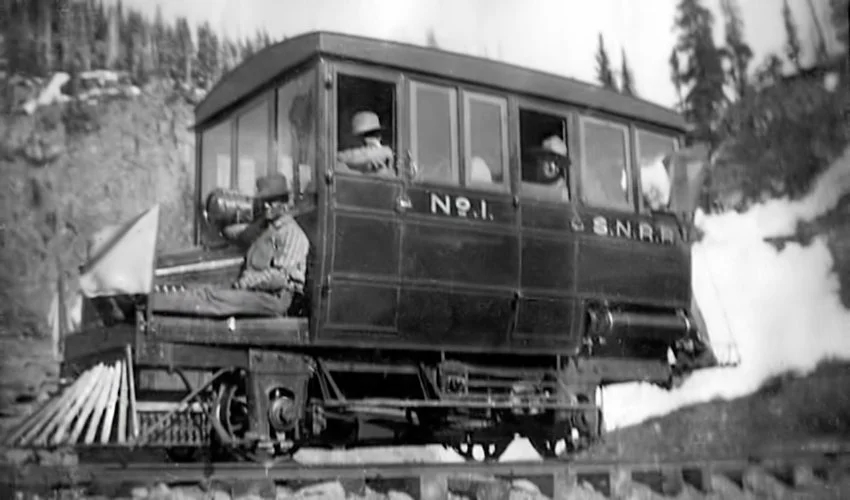
Innovative railcar designed for Otto Mears in the early 1900s, built for tight mountain curves during railroad and road development in the San Juan Mountains.

Steam locomotive of the Durango & Silverton Narrow Gauge Railroad at the historic Silverton rail yard in the San Juan Mountains of Colorado
If you want the complete experience in one place, the San Juan Skyway becomes most meaningful when viewed as a connected system of landscapes, geology, and history.
→ Go Deeper: The Complete San Juan Skyway Guidebook
The San Juan Skyway: Into the Heart of the Colorado Rockies
Want the full Journey?