Mining, Boomtowns, and the Wild Years
QUICK FACTS
Late 19th-century mineral discoveries of silver, gold, and other ores transformed the San Juan Mountains
Rapid mining expansion led to the creation of boomtowns such as Ouray, Silverton, and Telluride
Mining settlements developed quickly from tents and shacks into permanent wooden communities
Railroads, trails, and transport routes were built to move ore to regional and national markets
Mining operations reshaped landscapes through excavation, tunneling, and processing infrastructure
Immigrant labor and diverse populations contributed to a multicultural mountain society
Abandoned mines, ghost towns, and preserved buildings remain visible today along the San Juan Skyway
The discovery of silver, gold, and other valuable minerals in the late 19th century transformed the San Juan Mountains. Mining reshaped rugged landscapes, fueled rapid population growth, and created a network of boomtowns along the Skyway. These settlements were both opportunities and challenges, blending danger, ingenuity, and the emergence of a distinct mountain culture. Mining not only altered the environment but also left a lasting imprint on the region’s towns, trails, and infrastructure. Visitors exploring the San Juan Skyway today can trace the legacy of these mining communities through preserved buildings, abandoned mines, and interpretive sites that tell the story of human ambition in a demanding landscape.
The Silver Boom of the 1870s–1890s
Silver discoveries in the 1870s sparked one of the most intense periods of economic and population growth in the San Juans. Towns such as Ouray, Silverton, and Telluride sprang up almost overnight, connected by mining claims, footpaths, and eventually railroads. Mining camps ranged from temporary tents and shacks to permanent wooden structures. Local communities quickly developed services such as stores, saloons, schools, and churches, providing essential infrastructure for families and laborers. These settlements formed the foundation of towns that continue to exist along the San Juan Skyway.
Hardrock Mining Methods
Mining in the San Juan Mountains demanded skill, strength, and ingenuity. Key techniques included: • Deep shaft mining and tunneling – Excavating mountainsides to access ore veins in confined, often poorly ventilated spaces • Placer mining along streams – Extracting gold and other minerals from alluvial deposits using pans, sluices, and rudimentary hydraulic methods • Ore processing and smelting – Crushing and refining ore for transport to regional and national markets Work in these operations was physically demanding and hazardous, requiring innovative methods to move workers, animals, and materials across steep terrain.
Life in a Mining Camp
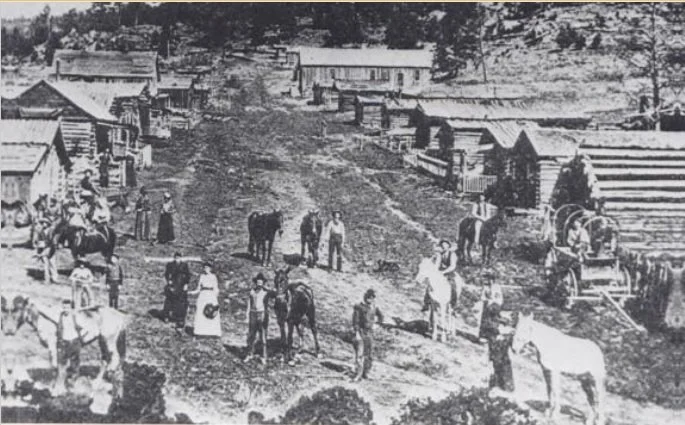
Mining towns were vibrant centers of commerce, labor, and social activity. Communities often included a mix of immigrants from Europe, Mexico, and other parts of the United States, creating a diverse cultural environment. Schools, churches, saloons, and businesses provided both essential services and gathering spaces. Daily life combined demanding work in the mines with opportunities for trade, entertainment, and community interaction. Boomtowns reflected resilience and adaptability as residents balanced economic opportunity with the realities of living in a high-elevation environment.
Ghost Towns and the Wild Years
Boom-and-bust cycles, remote geography, and frontier lawlessness defined the “wild years” of the San Juan Mountains.
Outlaws and lawmen – Legendary figures shaped regional folklore and frontier justice
Abandoned mines – Structures and shafts remain as reminders of the mining era
Preserved historic buildings – Surviving architecture offers insight into 19th-century life These remnants provide a tangible connection to the energy, risk, and determination that defined the mining boom.
Why This Topic Matters
Mining history shaped both the physical and cultural landscape of the San Juan Mountains.
The boom established towns, trails, and transport routes still visible today
Mining operations influenced settlement patterns, ecology, and resource use
Visitors gain insight into the realities of frontier life
The stories of boomtowns and ghost towns connect the region’s past to its present identity
Continue Exploring Mining, Boomtowns, and the Wild Years
The Silver Boom of the 1870s–1890s– Rapid growth of mining towns and silver extraction in the San Juans.
Hardrock Mining Methods – Techniques and challenges of mining in rugged mountain terrain.
Life in a Mining Camp – Daily life, commerce, and community in frontier mining settlements.
Lawmen, Outlaws, and Frontier Justice in the San Juans – Crime, law enforcement, and local lore.The Silver Crash of 1893– Economic collapse following the repeal of the Sherman Silver Purchase Act. Ghost Towns of the San Juans – Abandoned settlements and preserved historic buildings from the boom era.
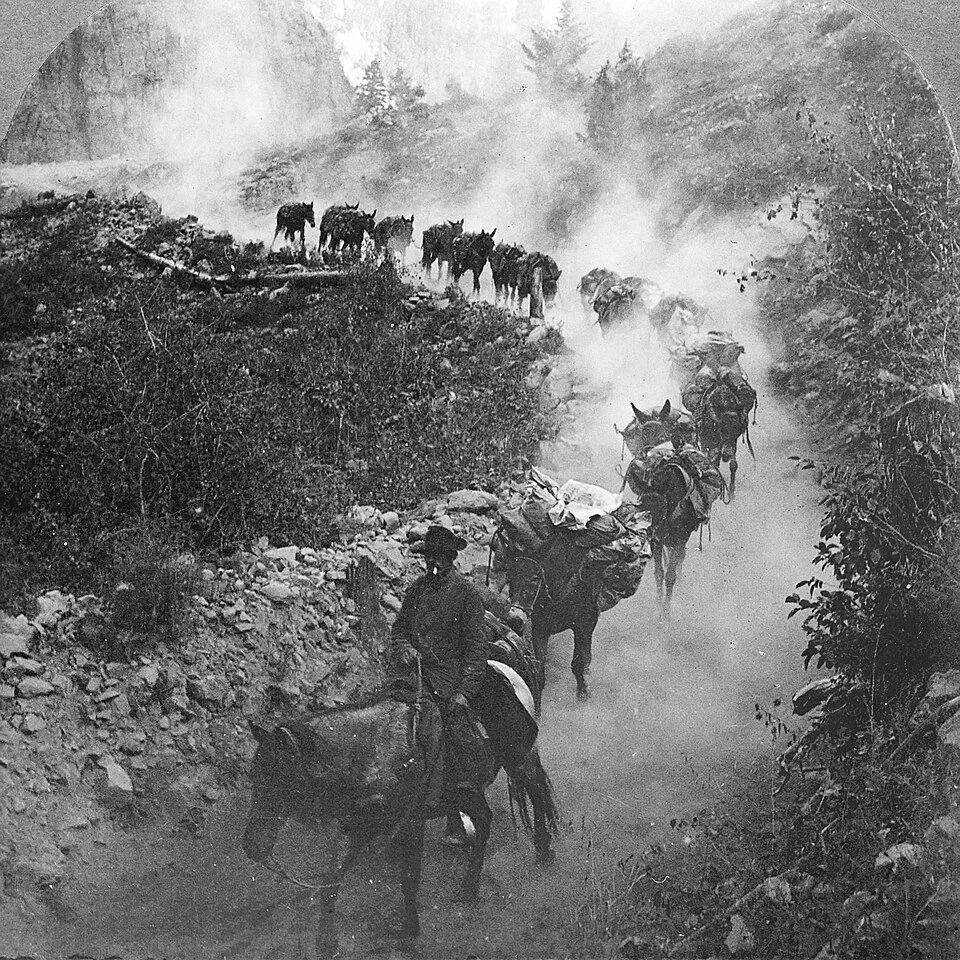
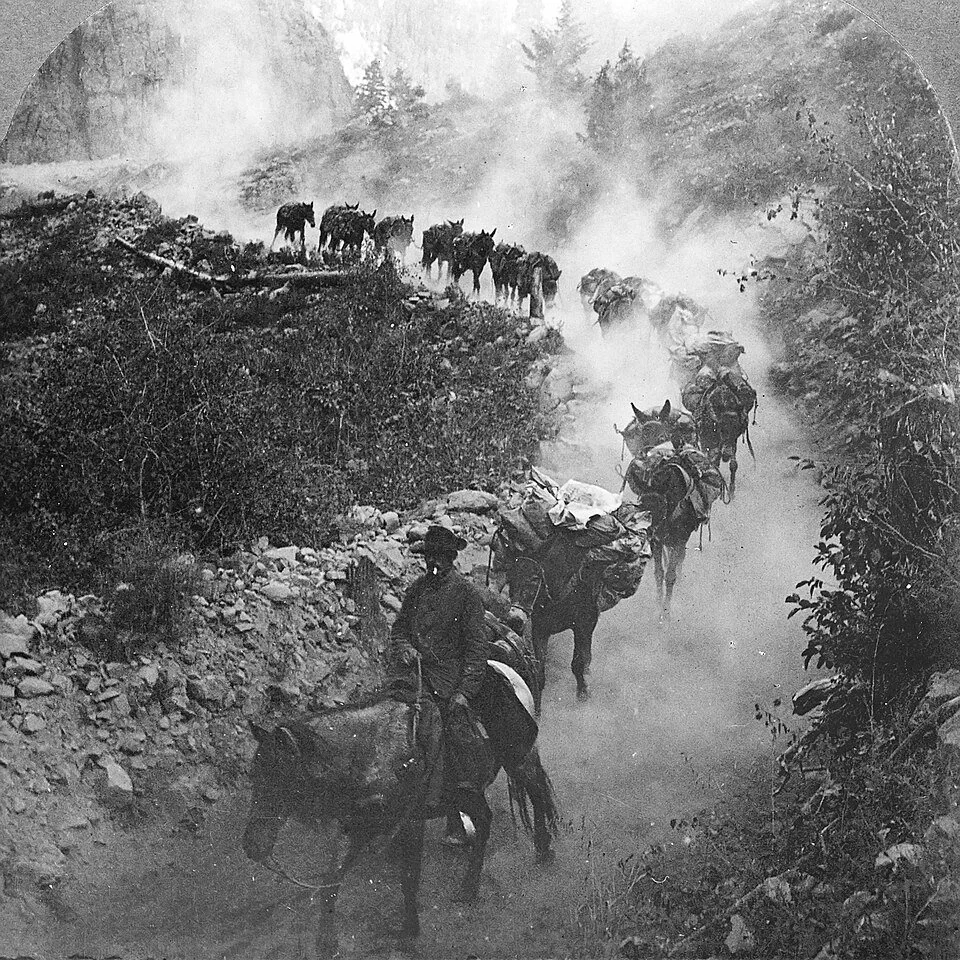
A burro train transports gold and mining supplies from the rugged mountains near Ouray, Colorado, illustrating the difficult logistics of extraction and transportation during the height of the San Juan mining boom.
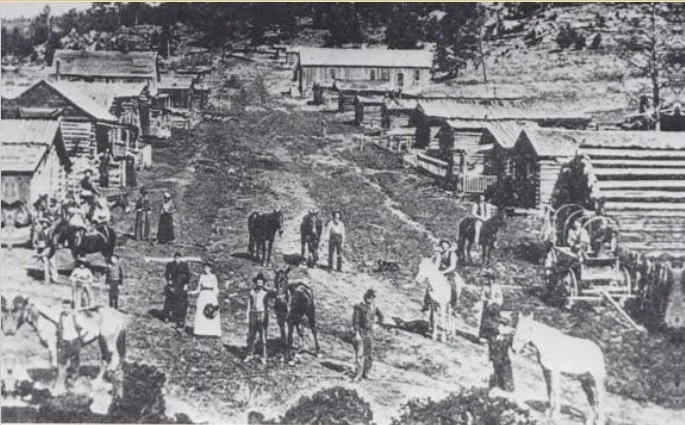
Manhattan gold mining town in 1888, a high-elevation settlement in Colorado’s San Luis Valley, illustrates everyday life in frontier mining communities. Like the mining camps of the San Juan Mountains, it reflects the challenges, ingenuity, and social life of 19th-century gold and silver boomtowns.
If you want the complete experience in one place, the San Juan Skyway becomes most meaningful when viewed as a connected system of landscapes, geology, and history.
→ Go Deeper: The Complete San Juan Skyway Guidebook
The San Juan Skyway: Into the Heart of the Colorado Rockies
Want the full Journey?