Quick Facts:
• Region: San Juan Mountains, southwestern Colorado
• Elevation Range: ~5,000 to 14,000+ feet
• Core Climate Driver: Elevation-driven weather variation
• Annual Snowfall: ~60–300 inches depending on elevation
• Annual Precipitation: ~18–30 inches regionally (~24 inches average)
• Sunny Days: ~240–280 days per year
• Key Weather Pattern: Summer monsoon storms (July–August)
• Travel Reality: Conditions vary dramatically over short distances
Climate, Seasons, and When to Visit
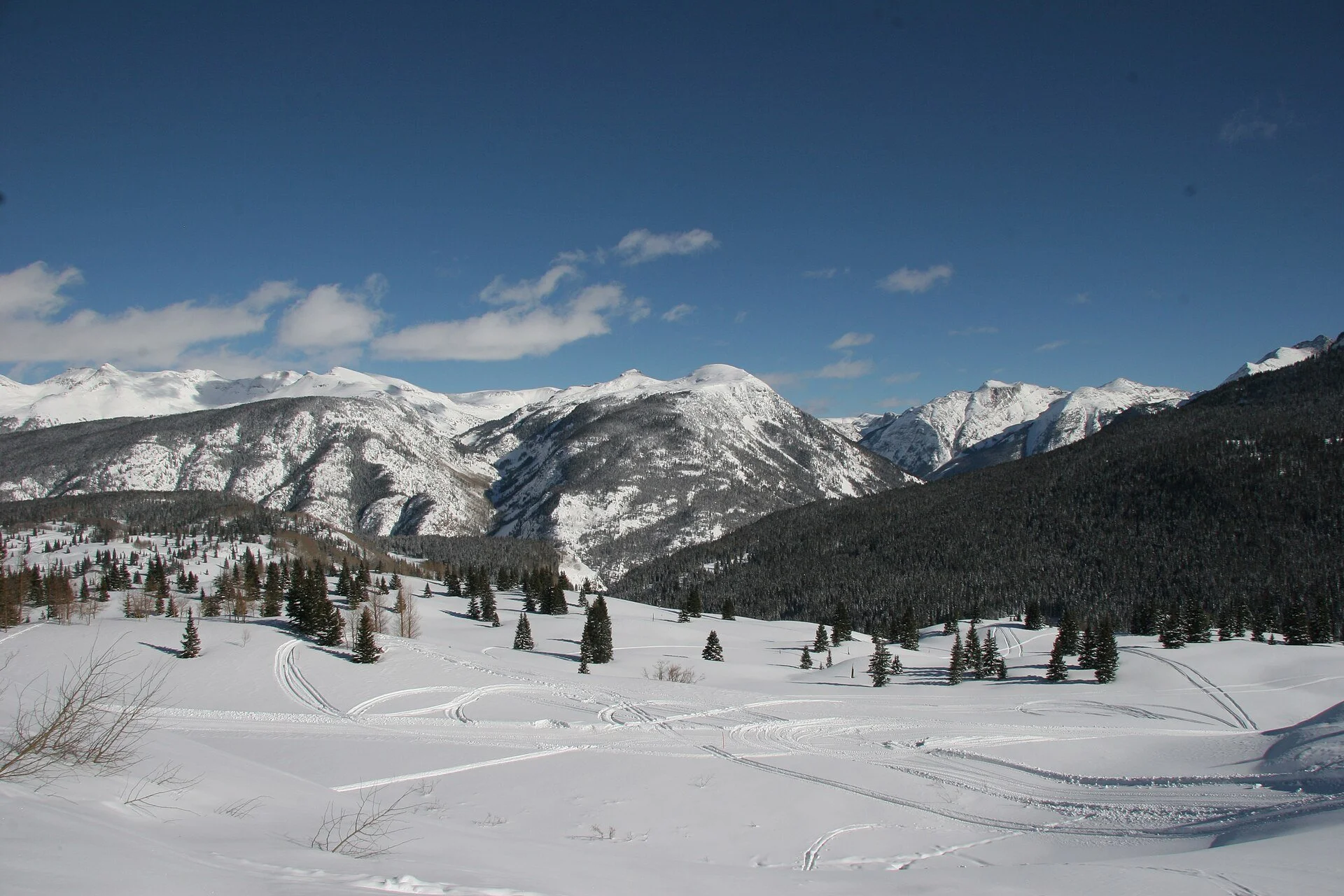
Snow-covered Molas Pass along the San Juan Skyway between Silverton and Durango, illustrating deep seasonal snowpack and winter alpine conditions.
Public domain – Wikimedia Commons
The San Juan Skyway climate varies dramatically with elevation, creating sharply different seasonal conditions across southwestern Colorado. Travelers can move from warm river valleys to snow-covered alpine passes within a short distance.
These elevation shifts influence snowfall, river flow, vegetation patterns, wildflower timing, and fall color progression. The weather is controlled by complex mountain atmospheric systems, producing rapid and highly localized changes.
Introduction
A Mountain Climate Shaped by Elevation
Elevation is the dominant force behind climate variation in the San Juan Mountains, ranging
from roughly 5,000 feet in river valleys to over 14,000 feet at high peaks.
Higher elevations experience:
• Colder year-round temperatures
• Longer winters and persistent snowpack
• Shorter growing seasons
Lower elevations experience:
• Earlier spring warming
• Warmer summer temperatures
• Reduced snow duration
Nearby towns can experience entirely different conditions on the same day due to elevation and canyon geometry.
Long-Term Climate Patterns
The region is shaped by two primary systems: Pacific winter storms and late-summer monsoon moisture from the southwest.
Typical averages:
• Annual precipitation: ~24 inches
• High-elevation snowfall: 160+ inches annually
• Sunny days: ~250 per year
• Precipitation days: 100+ annually
Winter delivers most annual moisture, while July–August monsoon storms bring frequent afternoon thunderstorms. Late spring is typically the driest period.
Mountain snowpack functions as a natural reservoir, gradually releasing water during spring melt.
Key river systems include:
• Animas River
• Uncompahgre River
• Dolores River
These waters support agriculture, ecosystems, recreation, and municipal supply across southwestern Colorado.
Snowpack, Rivers, and Water Systems
Spring
Snowmelt drives high river flows and waterfall activity. Lower elevations green first while alpine zones remain snow-covered.
Summer
Peak travel season. Warm valley temperatures contrast with cool alpine conditions. Afternoon thunderstorms are common.
Autumn
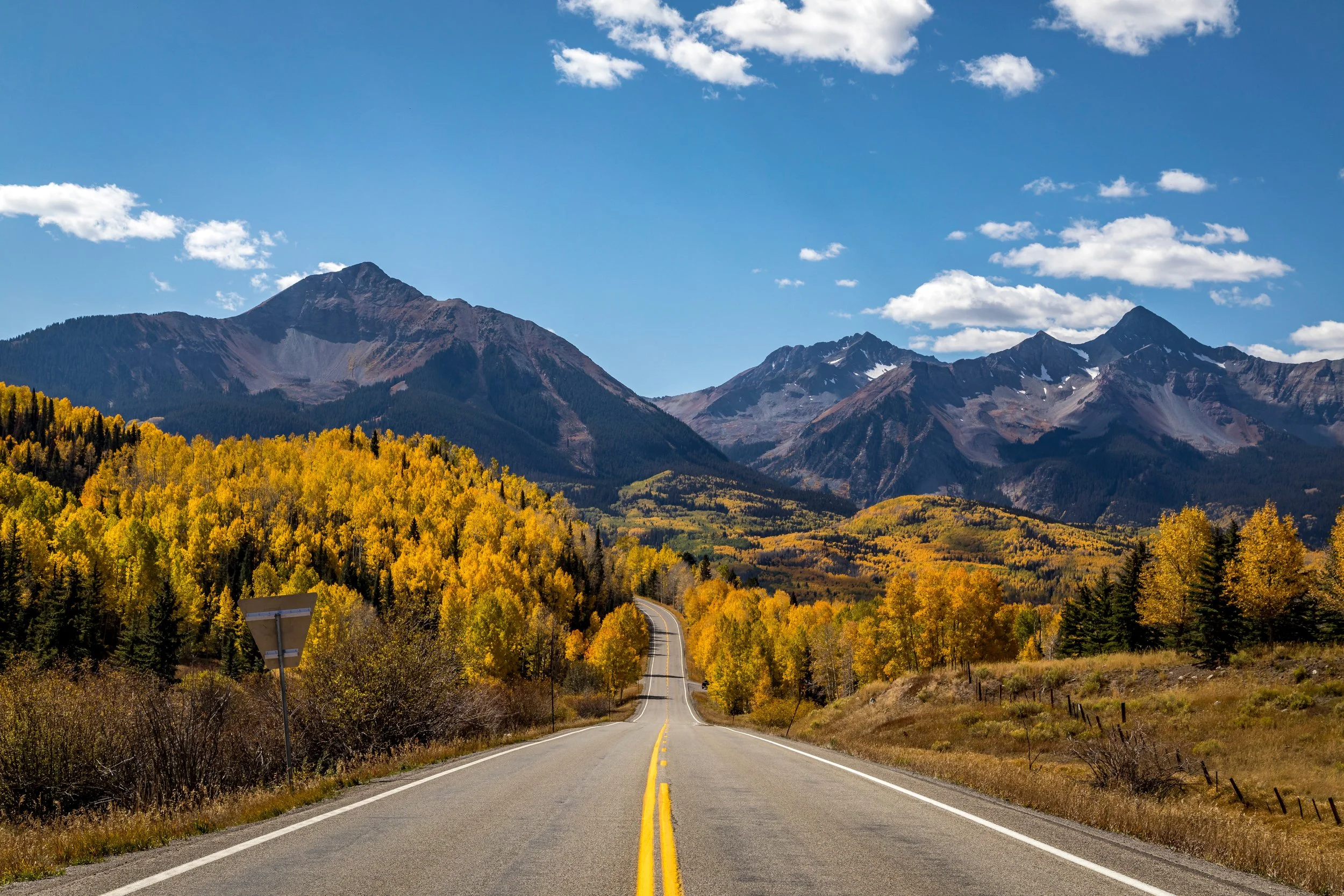
Aspens turn brilliant gold. Color progression moves from higher to lower elevations through early October.
Winter
Deep snowpack dominates high elevations. Valley towns remain more accessible with intermittent sunny conditions.
Seasonal Character of the San Juans
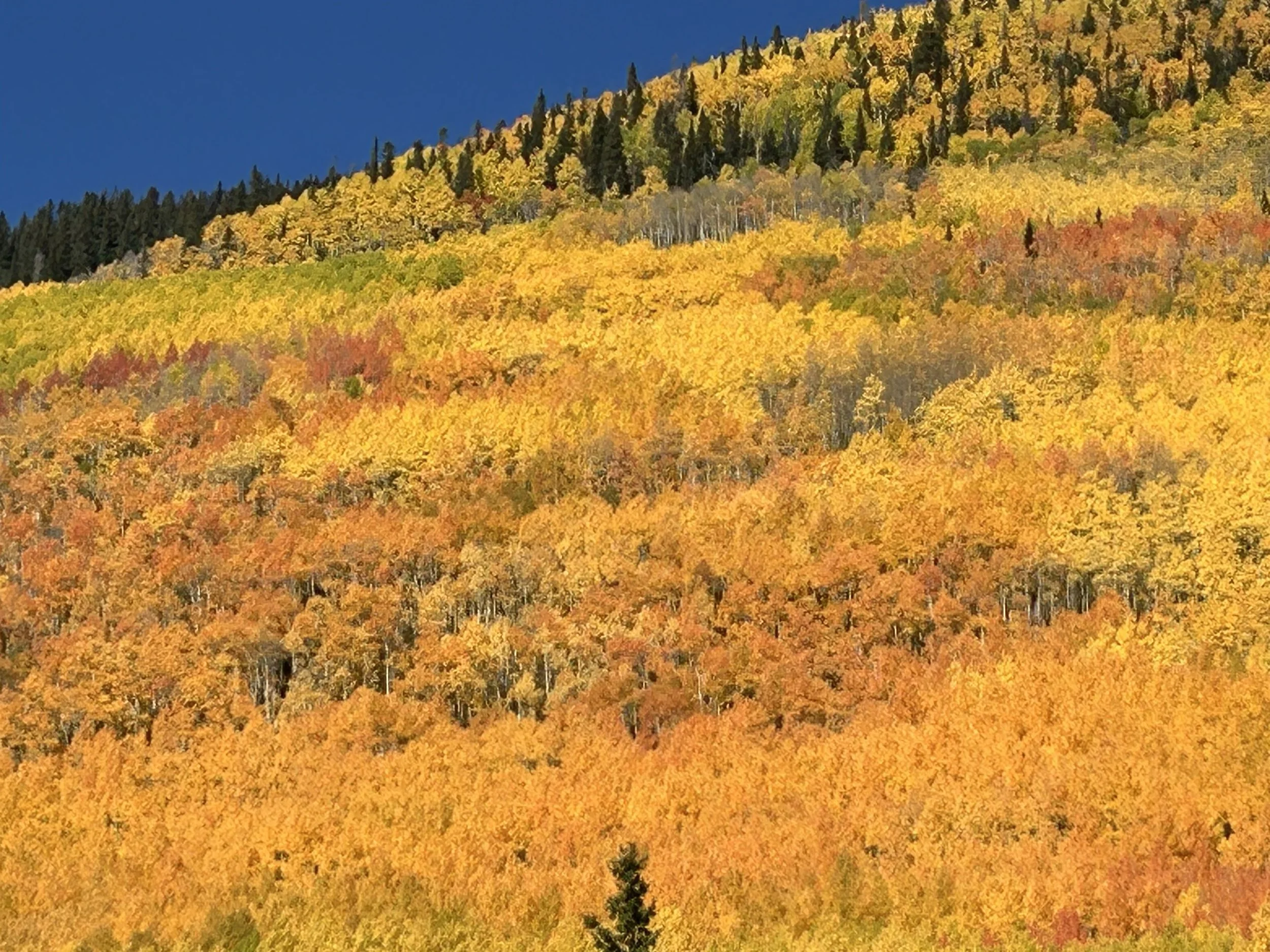
Photograph by Tom Barefoot
Local Climate Differences: Short Distance, Big Change
Elevation changes produce sharp climate variation across short distances.
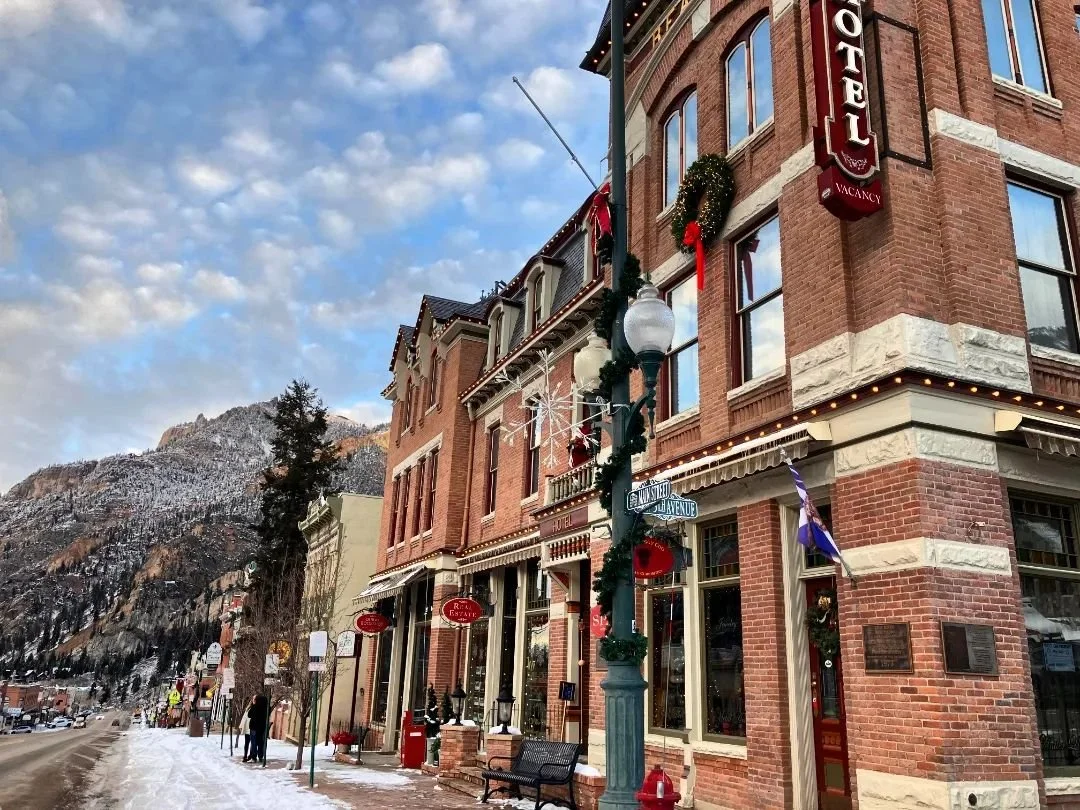
For example, Ouray sits in a sheltered canyon with moderate winter conditions, while Silverton—only 25 miles away but significantly higher—experiences colder and longer winters.
These contrasts shape ecosystems, travel patterns, and seasonal experiences throughout the Skyway.
Is there a Best Time to Visit?
There is no single best season. Each offers a distinct experience:
• Winter: Snow-covered alpine landscapes
• Spring: Waterfalls and snowmelt peak flows
• Summer: Full access to high country trails
• Autumn: Peak fall color season
Timing depends entirely on desired scenery and activities.
Regional Climate Snapshot: Durango
• Elevation: 6,512 feet
• Winter temperatures: ~20°F–45°F
• Annual snowfall: ~71 inches
• Annual precipitation: ~19 inches
• Summer highs: typically below upper 80s°F
Durango represents the warmer, lower-elevation end of the Skyway climate system.
Continue Exploring: Climate, Seasons, and When to Visit (links coming soon)
Snowpack and Water Systems of the San Juans – How mountain snow feeds rivers and ecosystems
Microclimates: Ouray vs. Silverton vs. Durango – Elevation-driven weather contrasts
The North American Monsoon in Southwest Colorado – Summer storm dynamics
Fall Color Timing and Elevation Bands – How altitude controls autumn progression
Climate Change Trends in the San Juans – Long-term environmental shifts
EXPLORE THE SKYWAY



Related San Juan Skyway References
Climate, Seasons, and When to Visit– Seasonal transitions and timing
Geography, Geology, and the Making of the San Juans – Natural forces shaping the region
Driving the San Juan Skyway– Planning the full scenic loop and travel experience
If you want the complete experience in one place, the San Juan Skyway becomes most meaningful when viewed as a connected system of landscapes, geology, and history.
→ Go Deeper: The Complete San Juan Skyway Guidebook
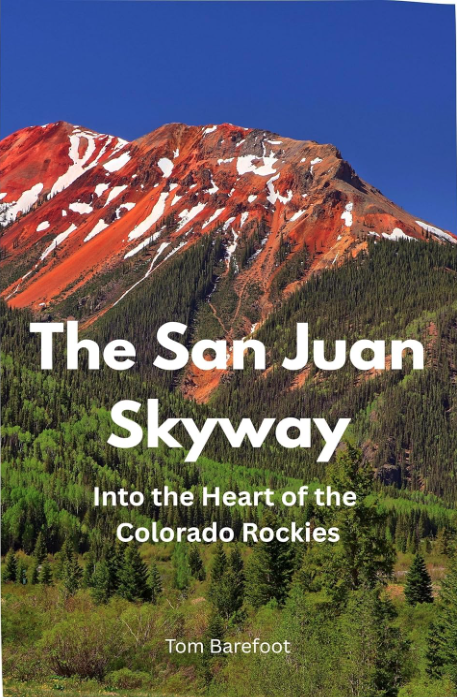
The San Juan Skyway: Into the Heart of the Colorado Rockies
Want the full Journey?